


[Public Comment Submission] “Assessment Report on Climate Change Impacts in Japan (Draft Overview)” (December 24, 2025)
date : 1/27/2026
Tags: Planetary Health

![[Public Comment Submission] “Assessment Report on Climate Change Impacts in Japan (Draft Overview)” (December 24, 2025)](https://hgpi.org/en/wp-content/uploads/sites/2/ph-20251224-top.png)
Health and Global Policy Institute (HGPI) has submitted public comments on the “Assessment Report on Climate Change Impacts in Japan (Draft Overview)” released by the Ministry of the Environment.
The “Assessment Report on Climate Change Impacts in Japan” presents a comprehensive assessment of climate change impacts in Japan, prepared approximately every five years by the Minister of the Environment in accordance with Article 10 of the Climate Change Adaptation Act. Based on the latest scientific evidence, it organizes and evaluates the magnitude and likelihood of impacts (significance), the timing of impacts and when adaptation efforts or major decisions need (urgency), and the level of confidence in projections. The report is intended to inform future national climate change adaptation plans as well as adaptation measures considered by local governments and businesses. It also summarizes the current status and future projections of climate change impacts in Japan by sector, including agriculture, forest/forestry and fisheries; water environment and water resources; natural ecosystems; natural disasters and coastal areas; human health; industrial and economic activities; life of citizenry and urban life; and inter-sectoral impact linkages.
Climate change has broad and complex impacts on human health and the foundations of daily life, such as food, water, living environment, ecosystems, economic activity, and healthcare delivery, through the increasing frequency and intensity of extreme heat, heavy rainfall, droughts, and natural disasters. As stated in the Sixth Basic Environment Plan, it is essential to evaluate climate change impacts and consider adaptation measures from the perspective of planetary health, which regards the health of the Earth and the health of people as inseparable. Moving forward from this perspective is a key challenge for both Japan’s future environmental policy and health policy.
Given this context, HGPI proposed the following points in its submission:
Key points of the public comment
- Agriculture, Forest/Forestry and Fisheries: To include descriptions of health and social impacts such as widening nutritional disparities, deterioration of mental health associated with depopulation and livelihood insecurity in rural and fishing communities, and the weakening of local communities
- Water Environment and Water Resources: To clearly state that climate change-induced alterations in water environment and water resources are linked to the secure supply of safe drinking water and to public health impacts, including hygiene conditions and water-related infectious disease risks
- Natural Ecosystems (1): To add a description of the relationship between qualitative and quantitative changes in ecosystem services and human health and resilience
- Natural Ecosystems (2): In the evaluation of species’ range shifts and invasive species, to supplement the description with the health risks posed by the expansion of disease vectors (such as arthropods that transmit infectious diseases) and allergy-causing plants
- Human Health: To clearly state that health impacts from heat tend to be concentrated among vulnerable populations, including older adults, infants and children, people with underlying conditions, and outdoor workers, and that climate change may exacerbate existing health disparities. It is recommended that perspectives on health inequalities and equity be explicitly incorporated into the assessment of climate change impacts
- Industrial and Economic Activities: To clarify that in sectors with extensive outdoor work or work in high-temperature environments (e.g., construction, transportation, and agriculture, forestry and fisheries), increasing risks of heatstroke and occupational accidents among workers can lead to reduced productivity and difficulties in securing human resources, thereby affecting companies’ human capital and business continuity. It is recommended that the assessment reflect a perspective that recognizes climate change as a “human capital risk”
HGPI will continue to contribute to advancing planetary health through policy proposals and collaboration with relevant organizations, by providing insights and promoting dialogue.
Please note that the call for public comment has already closed. For the PDF of the “Assessment Report on Climate Change Impacts in Japan (Draft Overview)”, please click here.
Related Posts
-
2026-01-16
[Announcement] HCWH SEA and HGPI Sign Memorandum of Understanding (MOU) to Advance Climate-Resilient and Sustainable Healthcare (November 24, 2025)
-
2025-12-22
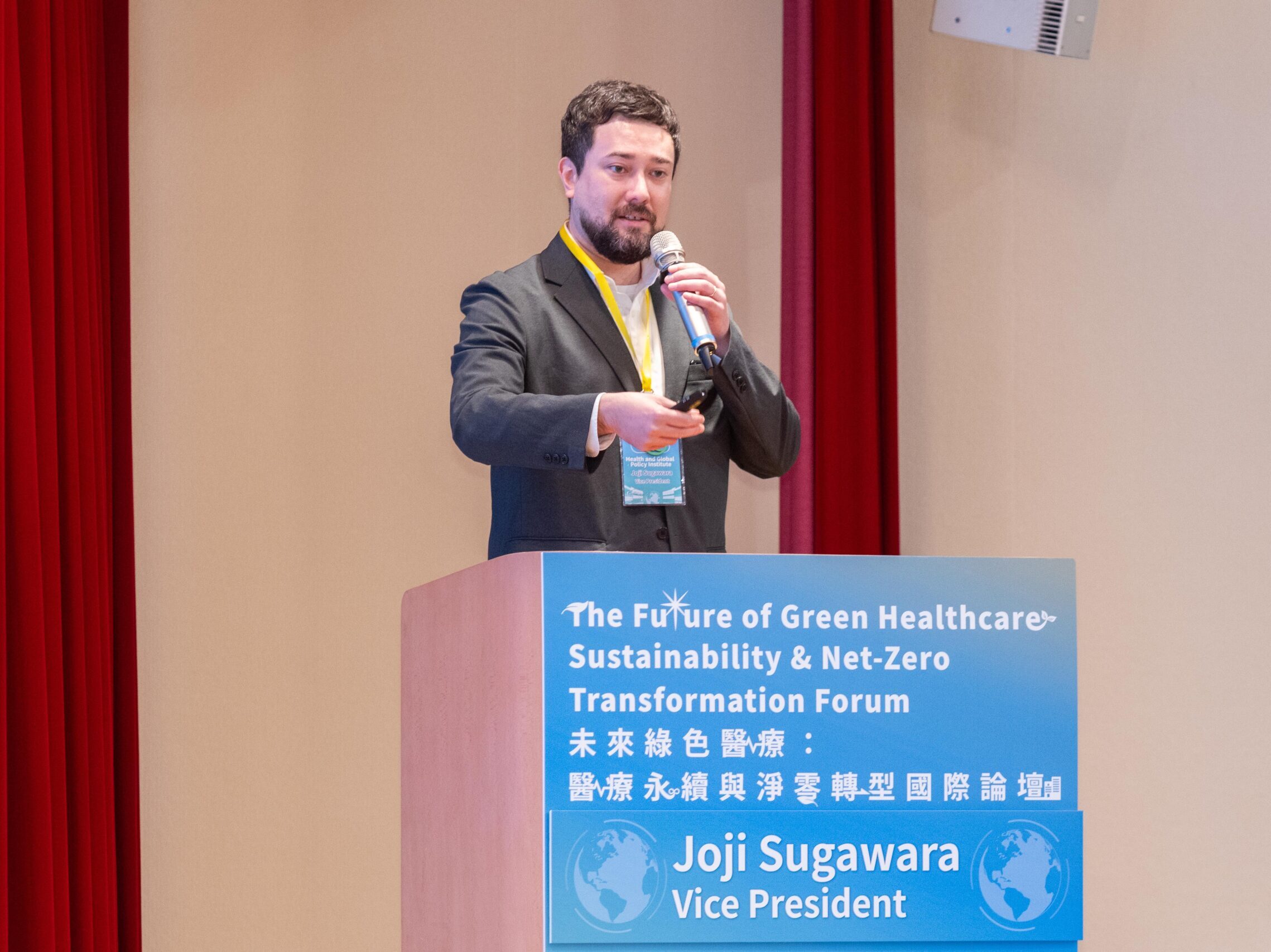
[Lecture Report] The Future of Green Healthcare: International Forum on Healthcare Sustainability and Net-Zero Transformation (Institute for Information Industry (III), November 25, 2025, Taipei, Taiwan)
-
2025-12-15
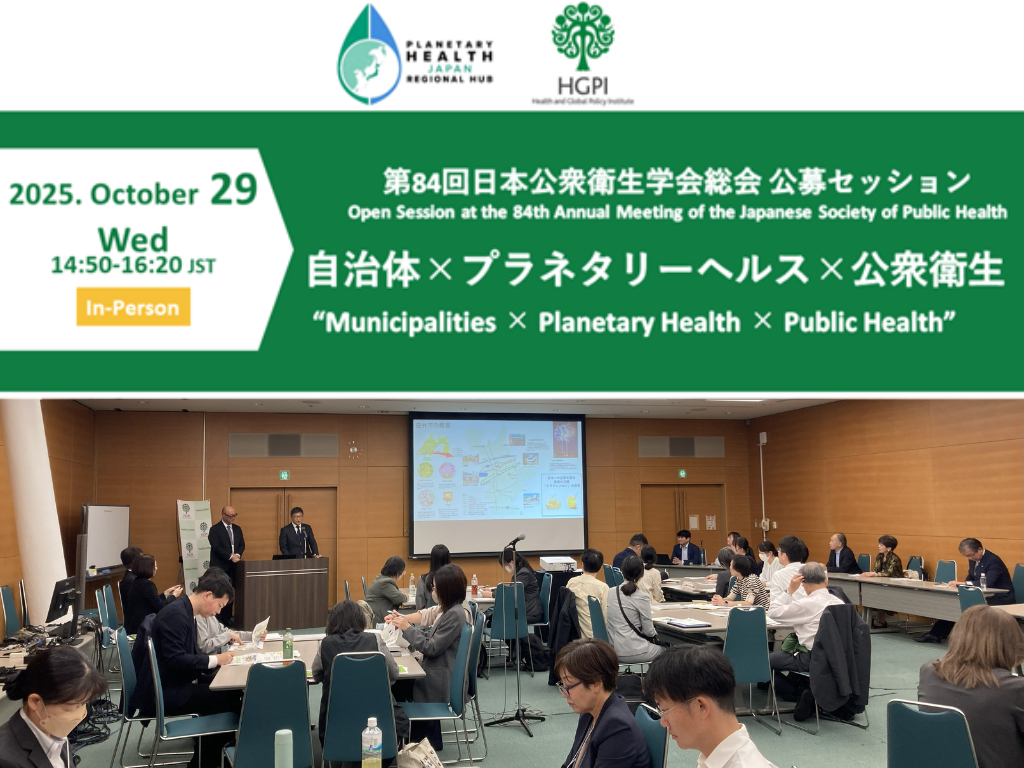
[Event Report] Open Session at the 84th Annual Meeting of the Japanese Society of Public Health “Municipalities × Planetary Health × Public Health” (October 29, 2025)
-

2025-12-09
[Event Report] Planetary Health Academy: Final Half (October 15-November 5, 2025)
-

2025-12-03
[Event Report] “Climate Change and Health: Actions for the Future” (September 16, 2025)
-
2025-11-13
[Research Report] Perceptions, Knowledge, Actions and Perspectives of Healthcare Organizations in Japan in Relation to Climate Change and Health: A Cross-Sectional Study (November 13, 2025)
Top Research & Recommendations Posts
- [Research Report] The 2025 Public Opinion Survey on Healthcare in Japan (March 17, 2025)
- [Research Report] Perceptions, Knowledge, Actions and Perspectives of Healthcare Organizations in Japan in Relation to Climate Change and Health: A Cross-Sectional Study (November 13, 2025)
- [Policy Recommendations] Developing a National Health and Climate Strategy for Japan (June 26, 2024)
- [Policy Recommendations] Reshaping Japan’s Immunization Policy for Life Course Coverage and Vaccine Equity: Challenges and Prospects for an Era of Prevention and Health Promotion (April 25, 2025)
- [Policy Recommendations] Mental Health Project: Recommendations on Three Issues in the Area of Mental Health (July 4, 2025)
- [Research Report] Survey of Japanese Physicians Regarding Climate Change and Health (December 3, 2023)
- [Research Report] The 2023 Public Opinion Survey on Satisfaction in Healthcare in Japan and Healthcare Applications of Generative AI (January 11, 2024)
- [Publication Report] Planetary Health Promotion Project “Issues Facing Planetary Health and the Role of the Health Sector” (May 10, 2023)
- [Policy Recommendations] The Path to a Sustainable Healthcare System: Three Key Objectives for Public Deliberation (January 22, 2026)
- [Research Report] The Public Opinion Survey on Child-Rearing in Modern Japan (Final Report) (March 4, 2022)
Featured Posts
-
2025-12-11
[Event Report] Core Components of Universal Health Coverage (UHC): Achieving “Healthcare Without Financial Hardship” in Asia-Pacific and Japan (December 5, 2025)
![[Event Report] Core Components of Universal Health Coverage (UHC): Achieving “Healthcare Without Financial Hardship” in Asia-Pacific and Japan (December 5, 2025)](https://hgpi.org/en/wp-content/uploads/sites/2/HGPI_20251210_Core-Components-of-Universal-Health-CoverageUHC-top.jpg)
-
2025-12-12
[Registration Open] (Webinar) The 140th HGPI Seminar “Early Detection to Reduce COPD Disease Burden: Connecting Clinical Frontiers with Health Policy” (January 27, 2026)
![[Registration Open] (Webinar) The 140th HGPI Seminar “Early Detection to Reduce COPD Disease Burden: Connecting Clinical Frontiers with Health Policy” (January 27, 2026)](https://hgpi.org/en/wp-content/uploads/sites/2/hs140-top-3.png)
-
2026-01-09
[Registration Open] (Hybrid Format) Dementia Project FY2025 Initiative Concluding Symposium “The Future of Dementia Policy Surrounding Families and Others Who Care for People with Dementia” (March 9, 2026)
![[Registration Open] (Hybrid Format) Dementia Project FY2025 Initiative Concluding Symposium “The Future of Dementia Policy Surrounding Families and Others Who Care for People with Dementia” (March 9, 2026)](https://hgpi.org/en/wp-content/uploads/sites/2/dementia-20260309-top.png)
-
2026-01-22
[Policy Recommendations] The Path to a Sustainable Healthcare System: Three Key Objectives for Public Deliberation (January 22, 2026)
![[Policy Recommendations] The Path to a Sustainable Healthcare System: Three Key Objectives for Public Deliberation (January 22, 2026)](https://hgpi.org/en/wp-content/uploads/sites/2/is-20260122-top_ENG.png)
-
2026-01-26
[HGPI Policy Column] (No.68) – From the Intractable and Rare Diseases Project “Part 2 – Making Intractable and Rare Diseases a Priority Issue for the International Community: The WHA Resolution’s Vision for a Global Action Plan and Japan’s Role”
![[HGPI Policy Column] (No.68) – From the Intractable and Rare Diseases Project “Part 2 – Making Intractable and Rare Diseases a Priority Issue for the International Community: The WHA Resolution’s Vision for a Global Action Plan and Japan’s Role”](https://hgpi.org/en/wp-content/uploads/sites/2/Eyecatch_Column_RD_2-1.png)
